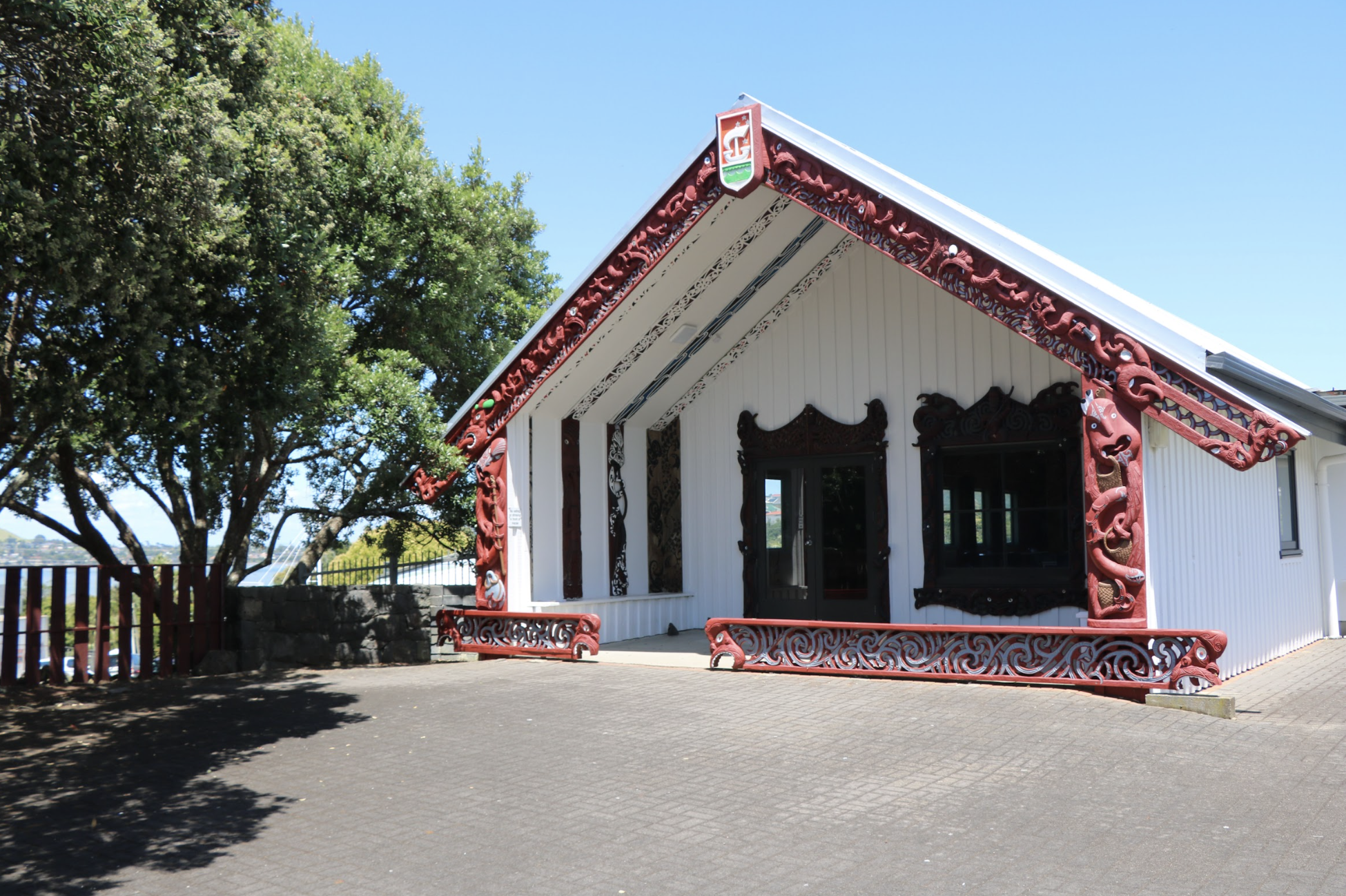
Te Haerenga, Te Marae Kura o te Kura Tuarua o Onehunga, stands today as a significant cultural and educational taonga for the school and wider community
Its story began in 1989, when a new Board of Trustees was elected under the Tomorrow’s Schools reforms and the school embedded its Treaty of Waitangi obligations into a newly developed Charter. In the early stages, contact was made with the Intermediate and contributing primary schools, and key Māori parents were invited to form a Komiti to progress Māori initiatives at the school. This Marae Komiti was formally established in 1990 and met regularly, bringing together a Chair, the Principal, Te Reo teacher, Māori BOT representative, and representatives from the Board, students, parents, and staff. Between 1990 and 1993, research was undertaken into the pre‑European history of the area, and contact was made to confirm mana whenua connections with Ngāti Whātua Ōrākei and Tainui. Support and advice came from Te Puea Marae and the whānau of Ihumātao.
Extensive consultation was also sought from other institutions with established marae, including the University of Auckland and the Epsom Teachers College marae, Tūtahi Tonu. Mane Tuaiti was acknowledged as Onehunga High School’s Kaumatua. In 1994, the Marae Komiti wrote the Constitution for the new marae, outlining its paramount purpose—the education of OHS students—alongside tikanga, management and policy, facility rules, finances, meetings, and constitutional processes.
The Board of Trustees ratified the Constitution shortly after. Tenders were let, an architect (Jasmax) and builder were selected, and the whare was named “Te Haerenga” by the Komiti, with guidance. Three potential locations were considered for the marae, with the current position at the front of the school ultimately chosen. Significant fundraising followed, alongside a lengthy process of Council approvals, neighbourhood consultation, and hearings. On 23 February 1996, Te Haerenga was officially opened.
The carvings, completed by Gordon (now Toi) Hatfield and funded by the school and Taskforce Green, embody the concept of “The Journey.” The themes within the carvings reflect both the learning pathway of students and the importance of the school’s location. The carved maihi depict Tumatauenga and Hine‑ahu‑one, surrounded by figures representing Enlightenment (Te Whakamarama), Desire (Te Hiahia), and Pursuit (Te Whainga), alongside Support (Te Tautoko), Inner Strength (Te Kaha), and Destiny (Te Whakaritenga).
Following the opening, the purpose of the Komiti shifted from planning and construction to supporting the ongoing life of the marae. Their role expanded to championing Te Ao Māori in the school, supporting the Te Reo Māori teacher, assisting kapa haka, organising whānau hui and pōwhiri, reporting to the Board, and receiving and discussing the achievement and wellbeing of Māori students.